
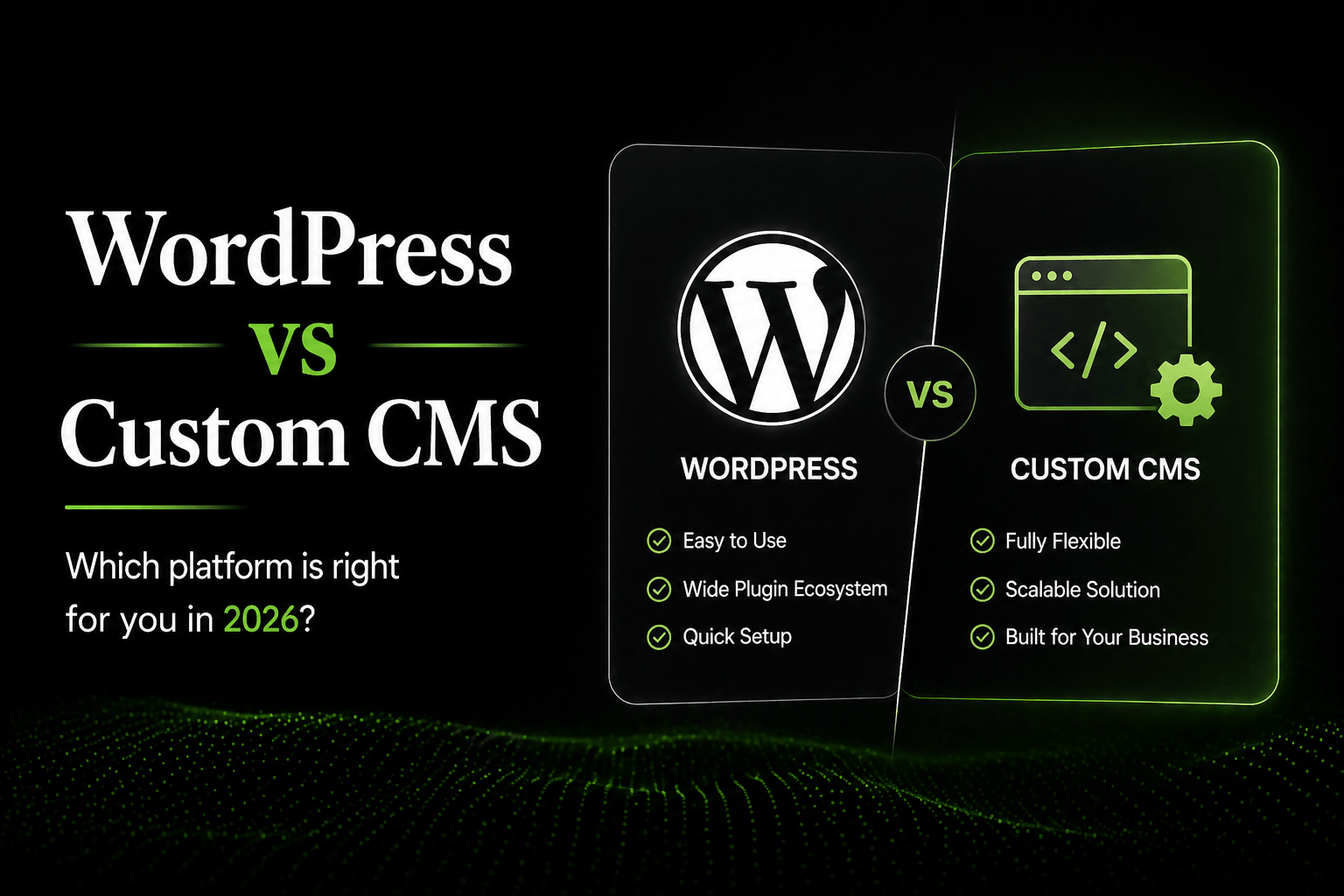
In the fast-evolving world of Web Development, businesses face a critical choice: build a website from scratch with custom code or leverage the popular WordPress platform. As we step into 2026, this debate isn’t just about features—it’s about future-proofing your online presence, delivering unmatched user experiences, and staying ahead of emerging technologies like AI-driven personalization and seamless progressive web apps.
Custom Web Development offers tailored solutions that adapt precisely to your brand’s unique needs, while WordPress provides speed and affordability through ready-made templates and plugins. But with rising demands for performance, security, and scalability, one approach is pulling ahead. This comprehensive guide breaks down the comparison to reveal which solution truly dominates Web Development in 2026.
Whether you’re a startup, e-commerce giant, or enterprise leader, understanding these differences will empower you to make the smartest investment in your digital future. Let’s dive deep into the pros, cons, and game-changing trends shaping Web Development today.
Understanding Custom Web Development
Custom Web Development involves building a website or web application entirely from the ground up using programming languages like HTML5, CSS3, JavaScript frameworks (React, Vue, or Angular), backend technologies (Node.js, Python, or Laravel), and databases tailored to specific requirements. Unlike template-based platforms, every line of code is crafted to align with your business goals.
The Process Behind Custom Web Development
The journey starts with discovery sessions where developers map user journeys, business objectives, and technical needs. Wireframing, prototyping, and iterative testing follow, ensuring the final product feels intuitive and branded. In 2026, this process integrates agile methodologies with AI-assisted coding tools, reducing timelines while maintaining precision.
Developers focus on clean, maintainable code that supports headless architectures, microservices, and API-first designs. This flexibility allows seamless integration with third-party tools, CRMs, or emerging tech like blockchain for secure transactions.
Key Benefits of Custom Web Development in 2026
Performance stands out as a major win. Custom sites load in under two seconds, boosting SEO rankings and conversion rates. They’re optimized for core web vitals—metrics Google prioritizes—without bloated plugins slowing things down.
Scalability is another powerhouse. As your business grows, custom Web Development handles traffic spikes effortlessly through cloud-native architectures like AWS or Google Cloud. Need to add AI chatbots or real-time analytics? It’s built-in, not bolted on.
Security receives enterprise-grade attention. Developers implement custom firewalls, encryption standards, and regular penetration testing. In an era of sophisticated cyber threats, this proactive approach minimizes vulnerabilities that plague pre-built platforms.
Branding and user experience reach new heights. Every pixel reflects your identity. Interactive elements, personalized dashboards, and accessibility compliance (WCAG 2.2 standards) create memorable journeys that convert visitors into loyal customers.
Potential Challenges to Consider
Initial development costs can be higher—typically 3-5 times more than a basic WordPress setup—due to specialized talent and longer timelines (often 8-16 weeks). However, long-term ROI justifies this through reduced maintenance and superior performance.
Finding skilled developers requires vetting agencies or in-house teams experienced in modern stacks. Yet, the investment pays dividends as your site evolves without platform limitations.
The Power of WordPress: A Quick Overview
WordPress powers over 40% of the web, making it the go-to for quick launches. It’s an open-source content management system (CMS) with thousands of themes and plugins available via its marketplace.
How WordPress Works in Practice
Users install WordPress on a hosting server, select a theme, and extend functionality with plugins like Elementor for drag-and-drop design or WooCommerce for e-commerce. Updates happen automatically, and non-technical users can manage content easily.
In 2026, WordPress has evolved with block themes (Full Site Editing) and improved Gutenberg editor, making it more developer-friendly for basic customizations.
Advantages for Budget-Conscious Businesses
Speed to market is unmatched. A functional site can launch in days, not months. Costs start as low as $500-$5,000, appealing to small businesses and bloggers.
Huge community support means free resources, forums, and plugins for almost any feature—from SEO optimization (Yoast) to email marketing integrations.
Limitations That Matter in 2026
Performance often suffers as plugins accumulate, leading to slower load times and higher bounce rates. Security remains a constant concern; popular targets for hackers, WordPress sites require frequent updates and premium security plugins.
Customization hits walls. While child themes and custom CSS help, deep modifications demand PHP expertise and risk breaking updates. Scalability struggles under heavy traffic without expensive hosting and caching layers.
Vendor lock-in emerges over time. Migrating away from WordPress proves complex and costly once data and custom code intertwine.
Head-to-Head Comparison: Custom Web Development vs WordPress
To determine the winner in 2026 Web Development, let’s compare them across critical factors.
Performance and Speed
Custom Web Development excels here. Developers optimize every asset, implement lazy loading, and use CDNs natively. Sites achieve 95+ scores on Google PageSpeed Insights consistently.
WordPress sites, even with optimization plugins like WP Rocket, average lower scores due to database queries and plugin overhead. In 2026, where mobile-first indexing rules, custom solutions deliver lightning-fast experiences that boost rankings and user satisfaction.
Customization and Flexibility
Custom Web Development offers unlimited possibilities. Want a unique checkout flow integrated with inventory AI? Or a dashboard pulling real-time data from multiple APIs? It’s possible without compromises.
WordPress customization relies on plugins and themes. While versatile for standard needs, unique features often require expensive custom development or workarounds that compromise performance.
Security Considerations
Custom builds start secure by design—using modern frameworks with built-in protections against SQL injection, XSS, and CSRF. Regular audits and zero-trust architectures keep threats at bay.
WordPress requires constant vigilance. Its popularity makes it a prime target; one outdated plugin can expose your site. In 2026, with rising AI-powered attacks, custom Web Development provides superior peace of mind.
Scalability for Growing Businesses
Custom solutions scale horizontally with microservices and serverless functions. Enterprises handle millions of users without downtime.
WordPress scales vertically through hosting upgrades, but costs skyrocket. High-traffic sites often migrate to custom platforms for better control.
Cost Analysis: Initial and Long-Term
WordPress wins short-term affordability. However, ongoing plugin licenses, premium themes, and developer fixes add up—potentially exceeding custom costs within 2-3 years.
Custom Web Development demands higher upfront investment ($15,000-$100,000+ depending on complexity) but offers predictable maintenance and fewer surprises. ROI shines through higher conversions and lower hosting bills.
SEO and Marketing Potential
Both support SEO, but custom Web Development allows schema markup, lightning-fast indexing, and advanced analytics integration from day one. Developers craft semantic HTML and core features optimized for voice search and AI crawlers.
WordPress plugins like Rank Math help, but bloated code and duplicate content issues can hinder results. Custom sites dominate search in competitive niches.
Maintenance and Updates
WordPress demands frequent updates to core, themes, and plugins—risking compatibility issues. Custom sites receive tailored maintenance plans focused on feature enhancements rather than patching vulnerabilities.
Emerging Trends in Web Development for 2026
Web Development in 2026 is defined by intelligence, immersion, and sustainability. Here’s how each approach stacks up.
AI and Machine Learning Integration
Custom Web Development seamlessly embeds AI for predictive analytics, chatbots, and dynamic content personalization. Tools like TensorFlow.js or custom APIs deliver experiences that adapt in real-time.
WordPress plugins offer basic AI features, but deep integration feels clunky and resource-heavy.
Progressive Web Apps (PWAs) and Offline Capabilities
Custom builds create true PWAs with service workers, push notifications, and app-like interfaces. Users enjoy native experiences across devices without app store downloads.
WordPress can mimic PWAs via plugins, but performance and reliability lag behind native custom implementations.
Headless CMS and Decoupled Architectures
Custom Web Development thrives with headless setups (e.g., Strapi or Sanity as content backend, frontend in Next.js). This delivers blazing speed and omnichannel delivery.
WordPress supports headless via its REST API, but full decoupling often requires significant rework and loses some simplicity.
Sustainability and Green Web Development
Eco-friendly practices—like efficient code reducing server load—gain traction. Custom developers optimize for lower carbon footprints using green hosting and minimal assets.
WordPress sites, with heavier footprints from plugins and databases, face challenges meeting 2026 sustainability standards.
Enhanced User Experience with VR/AR
Custom Web Development integrates WebXR for immersive product demos or virtual showrooms. These features engage users in ways templates simply can’t replicate.
WordPress struggles to support advanced 3D/AR without heavy custom coding.
Real-World Case Studies
A leading e-commerce fashion brand switched from WordPress to custom Web Development in 2025. Load times dropped 65%, conversions rose 42%, and they handled Black Friday traffic without crashing—achieving $2.8M additional revenue in one quarter.
Conversely, a media publisher stuck with WordPress faced repeated hacks and slow performance despite $20K yearly maintenance. Migrating to custom saved costs long-term and improved SEO rankings by 180%.
These examples highlight how custom Web Development delivers measurable business impact in 2026’s competitive landscape.
Choosing the Right Option for Your Business in 2026
When WordPress is Sufficient
Choose WordPress for simple blogs, small business brochures, or quick prototypes with budgets under $10K and limited customization needs. It’s ideal for non-technical teams prioritizing ease over performance.
Why Custom Web Development is the Future
For ambitious brands seeking differentiation, scalability, and cutting-edge features, custom Web Development wins decisively. It future-proofs your investment against 2026 trends like AI ubiquity, privacy regulations, and immersive experiences.
Businesses investing in custom solutions report 3x higher customer retention and stronger brand loyalty. In an era where user expectations skyrocket, generic sites fade into the background.
Conclusion: Custom Web Development Emerges Victorious in 2026
After weighing performance, security, scalability, and alignment with next-generation trends, custom Web Development clearly outperforms WordPress for forward-thinking organizations. While WordPress remains a solid entry point, it can’t match the precision, innovation, and long-term value of a tailored solution.
In 2026, Web Development isn’t about quick launches—it’s about creating digital assets that drive growth, protect your brand, and delight users. Custom development empowers you to own your online destiny rather than renting it from a platform.
Ready to elevate your digital presence? Partner with expert Web Development professionals who specialize in custom solutions. Your website shouldn’t just exist—it should dominate. Contact a trusted development team today to discuss how custom Web Development can transform your business in 2026 and beyond.